
How Arizona basketball hijacks our productivity, our sanity, and our marriages every spring
In springtime Tucson’s roads are clogged with snowbirds and our nasal passages are clogged with pollen. But spring doesn’t just bring blooming saguaros and the slow creep of oven-level heat. It brings something far more destabilizing: March Madness.
Our collective mental, physical, and financial well-being hinges on the jump shot of a 19-year-old we’ve never met. The rest of America calls it a tournament; here, in the shadow of the Santa Catalinas, we treat it like a seasonal epidemic.
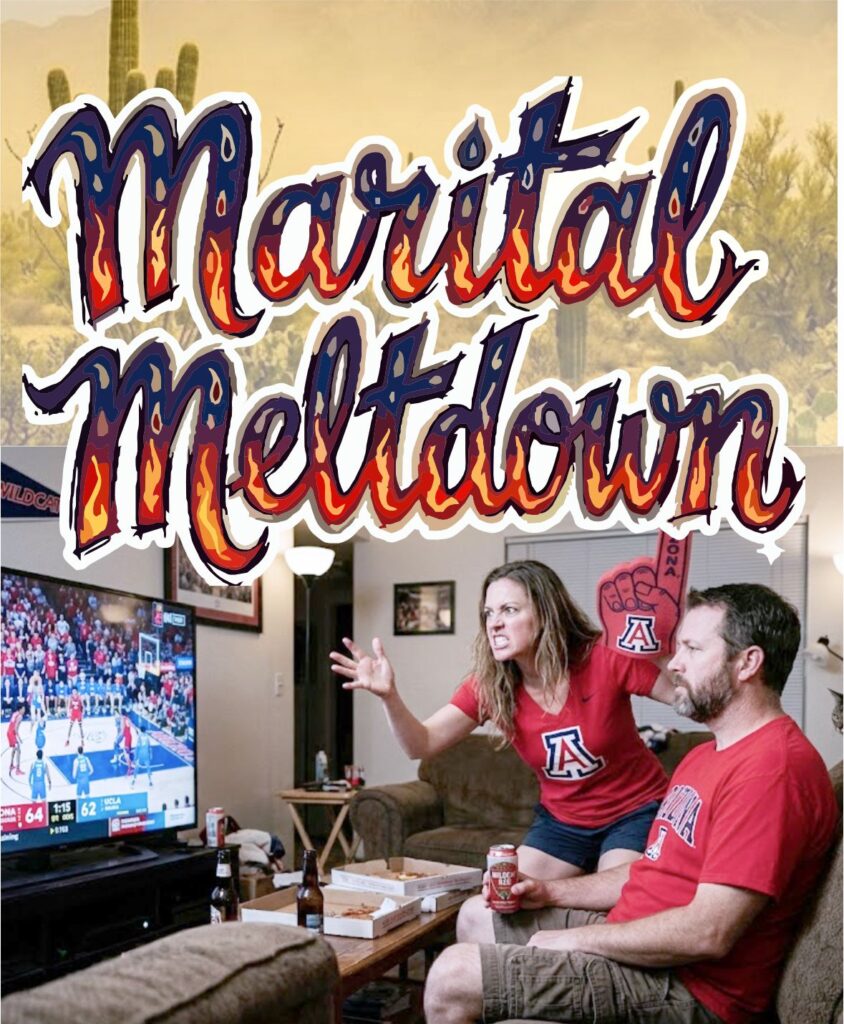
The following is a clinical overview of the four primary conditions affecting the population.
(Note: This study has not been peer-reviewed, mostly because everyone qualified to review it is currently watching basketball.)
As an Amazon Associate, I earn from qualifying purchases
Important disclaimer: This post is for news, educational and entertainment purpose only. It is not affiliated with, sponsored by, or endorsed by the University of Arizona, the NCAA, or any of their respective affiliates/ All trademarks, logos and brand names are the properties of their respective owners and are used here under Fair Use for the purpose of commentary and criticism.
Condition #1: Wildcat Fever
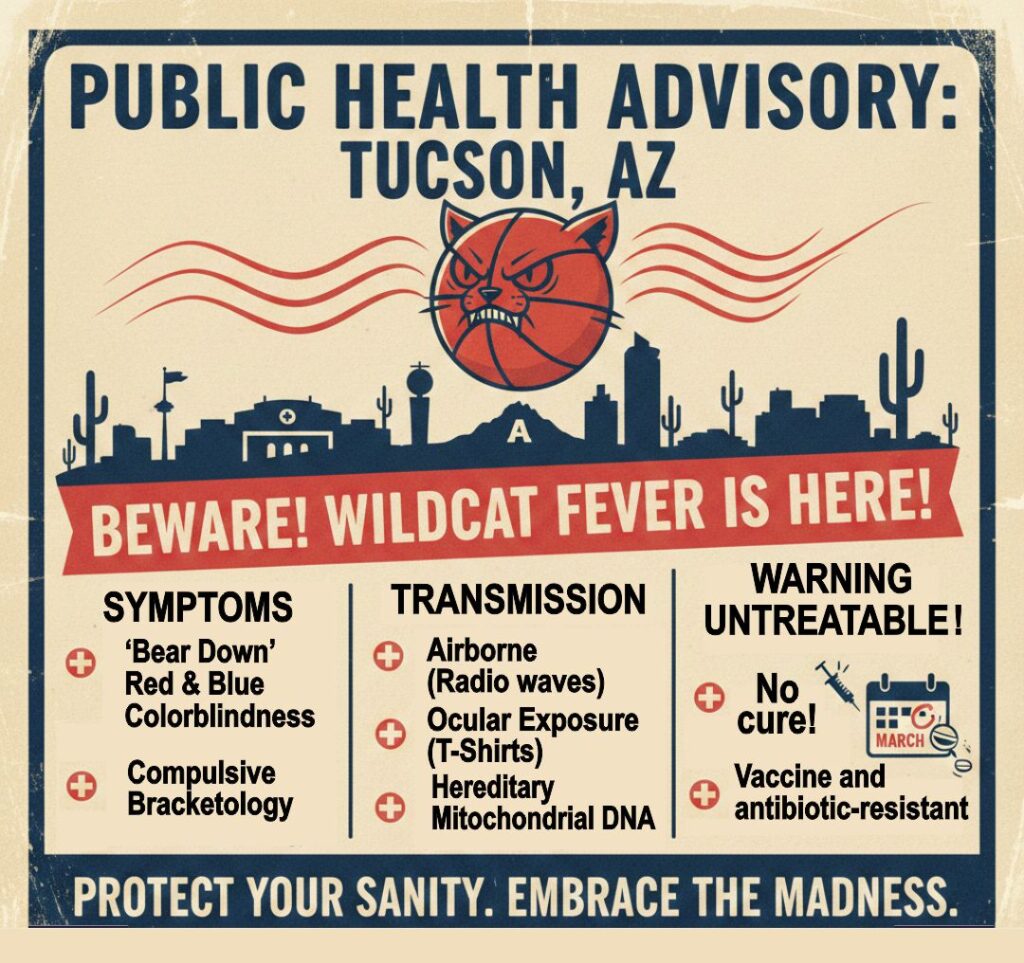
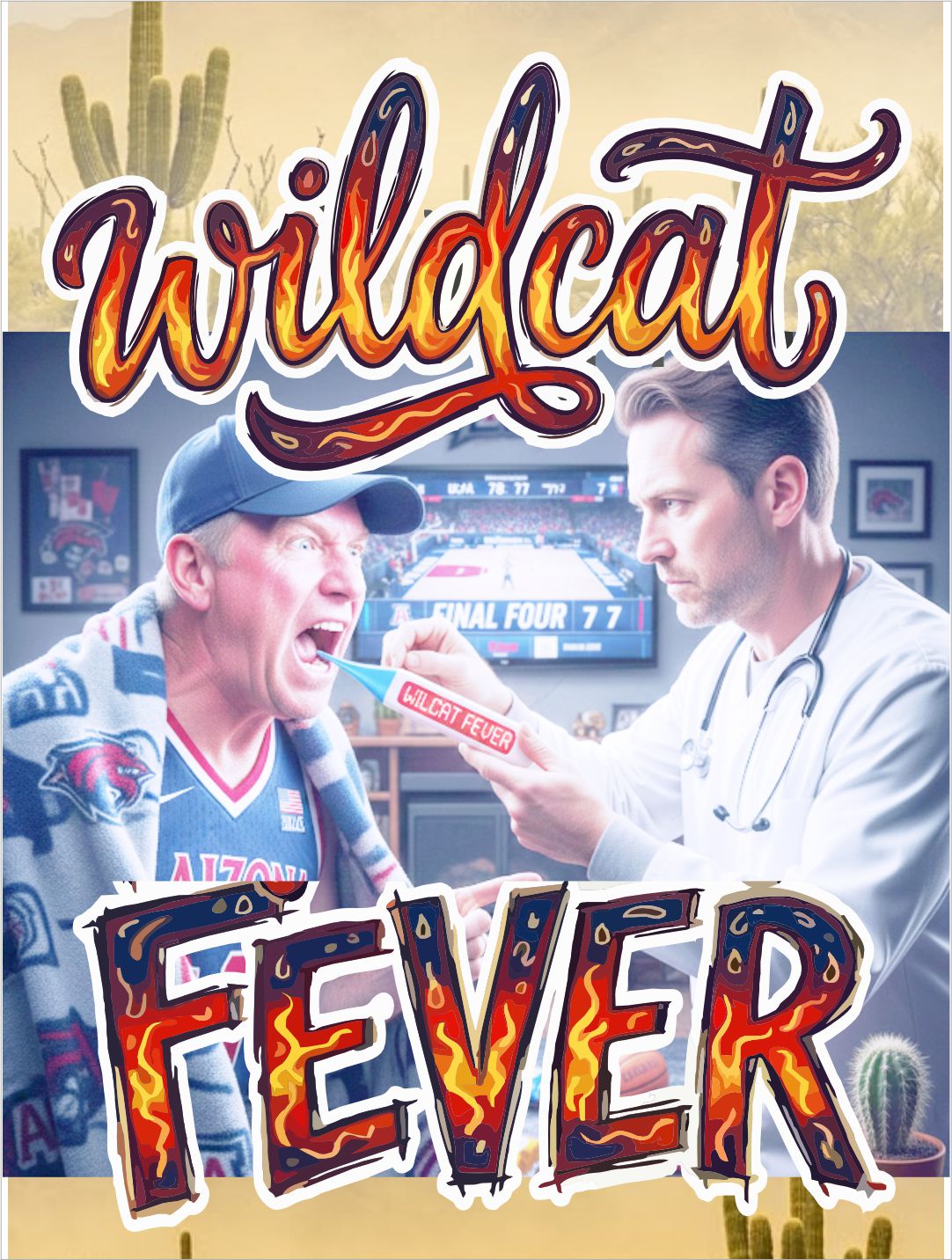
Wildcat Fever is a highly contagious disease that afflicts fans every March. The strain reached peak virulence in the late 1980s under the legendary Lute Olson and became embedded in our local DNA in 1997, when Mike Bibby and Miles Simon made belief a hereditary condition.
Epidemiologists estimate a 100% infection rate across the Santa Cruz Valley, with one known exception: that guy from Phoenix who “went to ASU for business.”
Symptoms include:
- Compulsive bracket optimism.
- The phrase “This is our year” repeated annually with religious sincerity.
- An involuntary eye twitch upon hearing the words “15-seed.”
The fever is vaccine-resistant. Analytics cannot reason with it. Once the red and blue enter the bloodstream, the prognosis is lifelong, glorious delirium.
Condition #2: March Madness (The Psychoses)
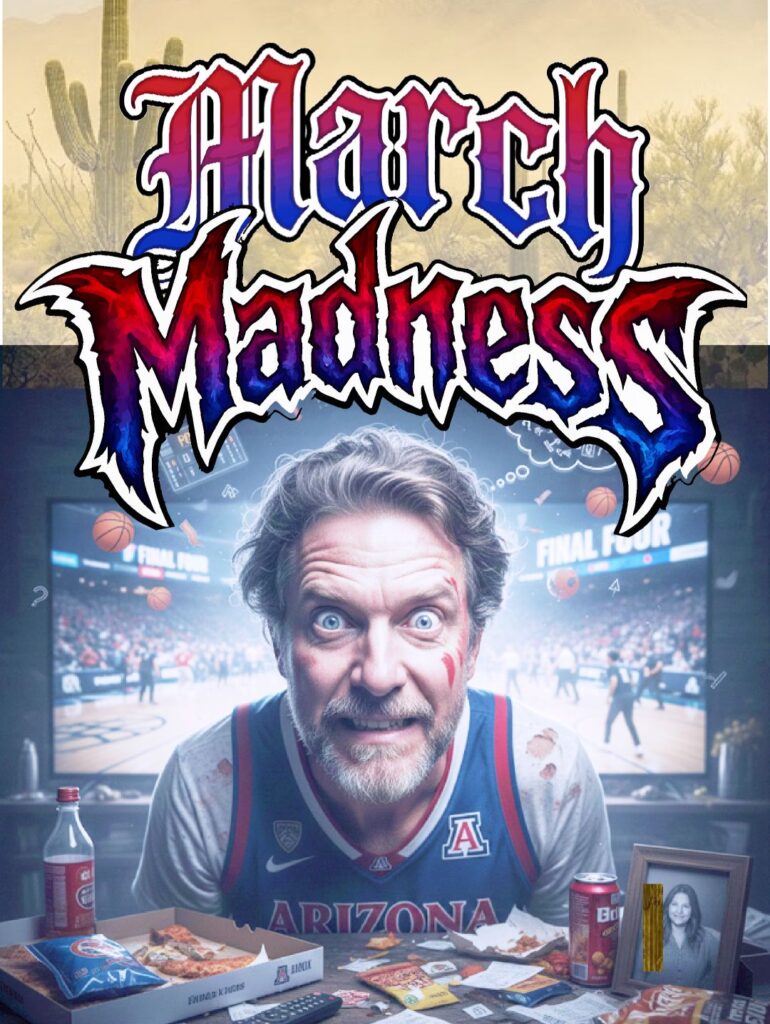
This isn’t a single illness, but a cluster of related disorders that lower productivity and allow Speedway Boulevard to achieve a level of serenity usually reserved for federal holidays.
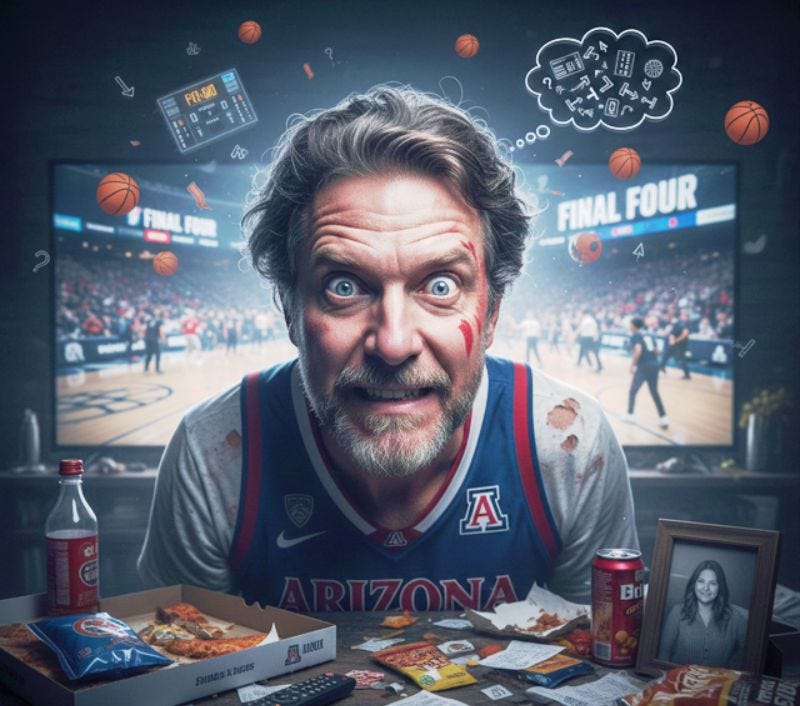
The most important psychoses making up March Madness are:
Seasonal Dissociative Disorder
A state in which jobs, taxes, and laundry cease to feel real, but a freshman’s free-throw percentage becomes spiritually urgent.
Anticipatory Traumatic Stress
A chronic anxiety triggered by the memory of early-round disasters. Patients may mutter “Princeton” or “Santa Clara” in hushed tones and refuse to ever trust a double-digit seed again.
Advantage Relinquishment Syndrome
Originating on March 5, 2005, when Arizona held a 15-point lead over Illinois with four minutes left — and lost. Patients may whisper “We were up fifteen” at random intervals for the rest of their lives.
Coach K Paranoia
Certified after the agonizing 2001 title loss, this historic phobia centered on the belief that the Wildcats, even with Gilbert Arenas and Richard Jefferson, would always be out-strategized by Duke’s Mike Krzyzewski.
Superstition Syndrome
The belief that your behavior in Tucson directly influences a ball bouncing 2,000 miles away. Manifestations include:
- Wearing an unwashed “lucky” polo.
- Refusing to leave the room during a second-half run (at significant personal risk).
- The Brian Jeffries Protocol: The sacred ritual of syncing the TV image with the radio call. If the audio runs three seconds ahead, you must sit in silence and accept the spoiler as a holy preview of joy.

Compact device that corrects audio delays between audio and video.
INTENDED USE: Critical calibration for the Brian Jeffries Protocol.
DOSAGE: Use once per tournament cycle to eliminate spoiler-induced psychoses.
Condition #3: Marital Meltdown
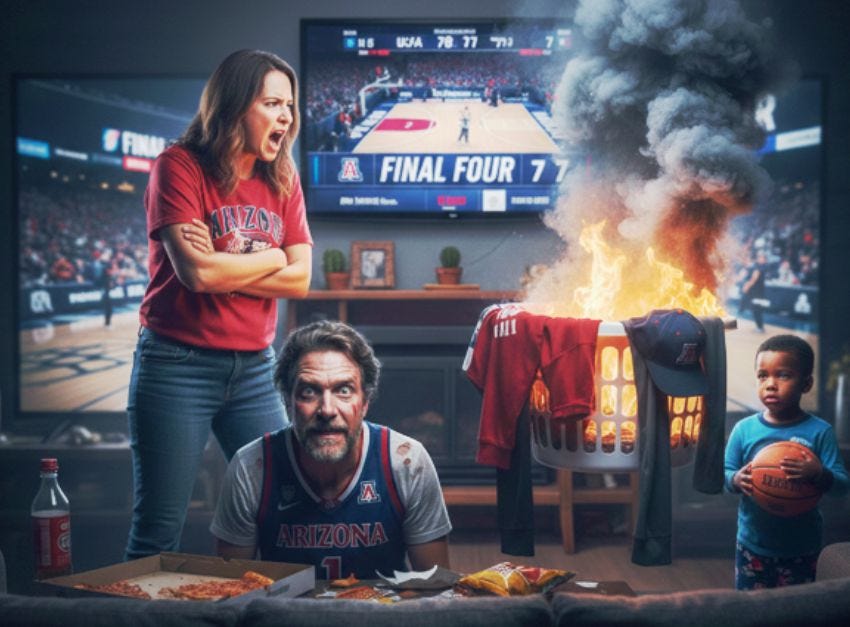
Wildcat Fever frequently produces domestic friction. The living room becomes a sanctuary for one partner and a hostage situation for the other.
Phrases such as “It’s just a game” are considered inflammatory and should not be used without protective gear. Date nights are rescheduled for “after the tournament,” which — in practical terms — often means never. However, in years of deep runs, victory heals all wounds.
Patient Testimony: “I can put up with the game, but why must you constantly rehash every play over and over again!” Claire Wakefield, Tucson AZ
Condition #4: Mark-Down Misery
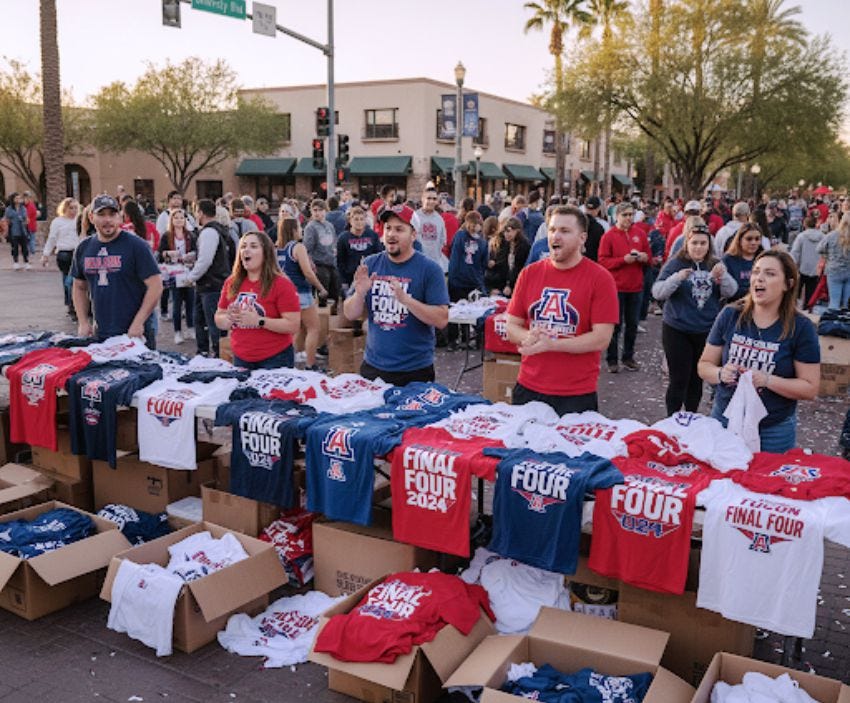
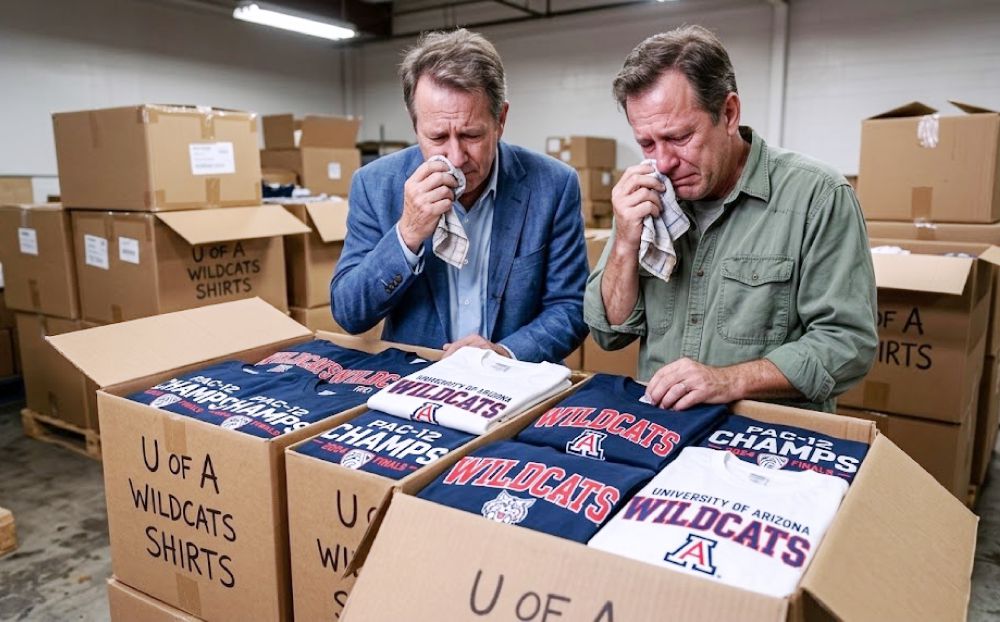
Not all suffering is psychological; some is retail. As Arizona advances, T-shirt vendors multiply like desert weeds. Printers have roughly 48 hours to produce thousands of “National Champions” shirts based on the triumph of hope over expectation.
If the team falters, those boxes of premature glory are exiled to the $2 clearance bin — a cotton monument to what could have been. Somewhere in a Tucson garage sits a box labeled “Future Champions,” aging like milk.
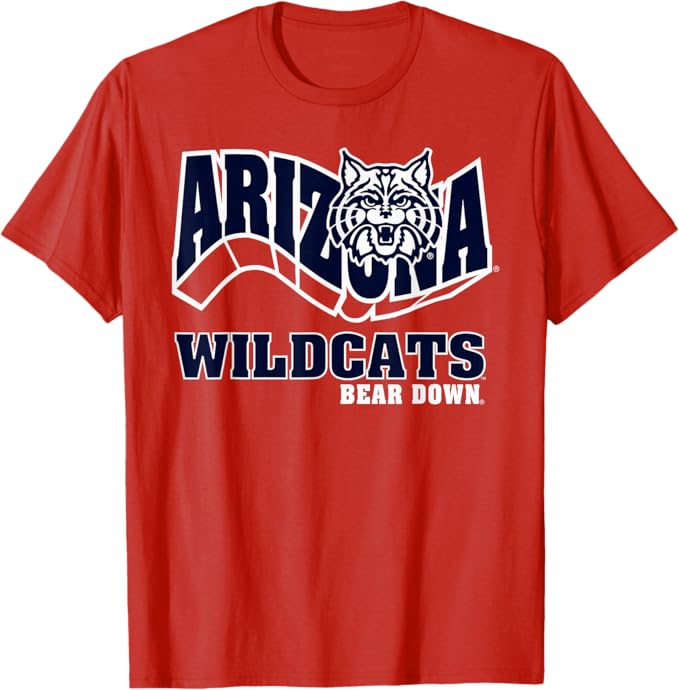
Arizona Wildcats Retro Flashback Red Officially Licensed T-Shirt
The Arizona Wildcats Retro Flashback Red Officially Licensed T-Shirt is designed for fans who appreciate a vintage look. It features a distressed team graphic -authentic to the Lute Olson era
Material: Soft, vintage-wash cotton for a “lived-in” feel.
Design: Classic arch mascot logo with a retro screen-print finish.
The Final Prognosis: Character Building
There is, of course, the slim possibility of a Final Four run and an unlikely victory.
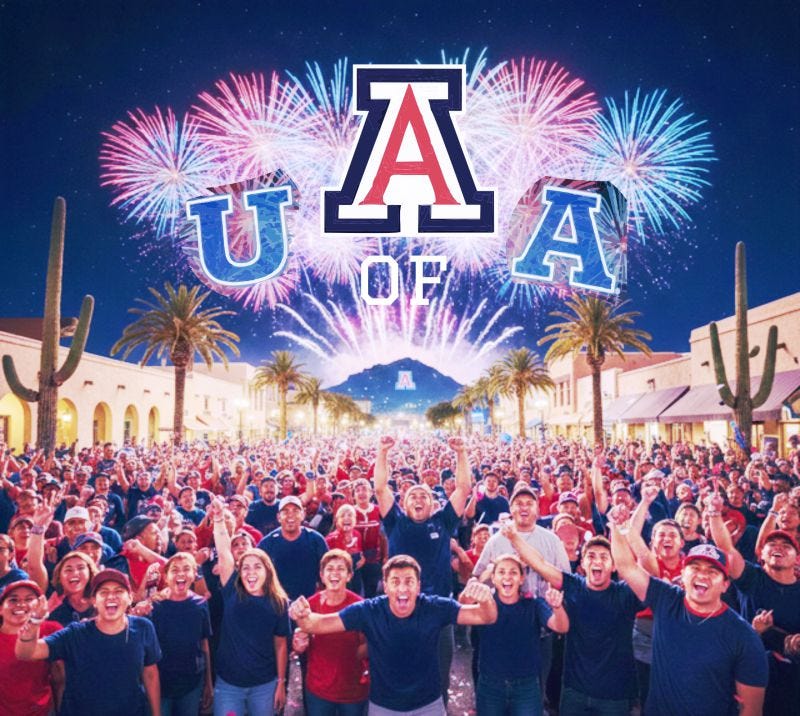
The City explodes in a paroxysm of celebratory euphoria, a 7′ 2″ giant from Eastern Europe becomes an unlikely folk hero. Parades and fireworks disturb our sleepy desert oasis: civil disorder breaks out as University Boulevard becomes a sea of red and blue. Bottles are smashed on Main Gate Square: fans climb light poles and dance on rooftops.
But statistics are cruel. Eventually, the shots stop falling. The bracket shatters. The desert air fills with the ominous clunk of a three-pointer hitting back iron. We join the fraternity of long-suffering losers, like the Buffalo Bills, finding consolation in Nietzsche: defeat is character-building.
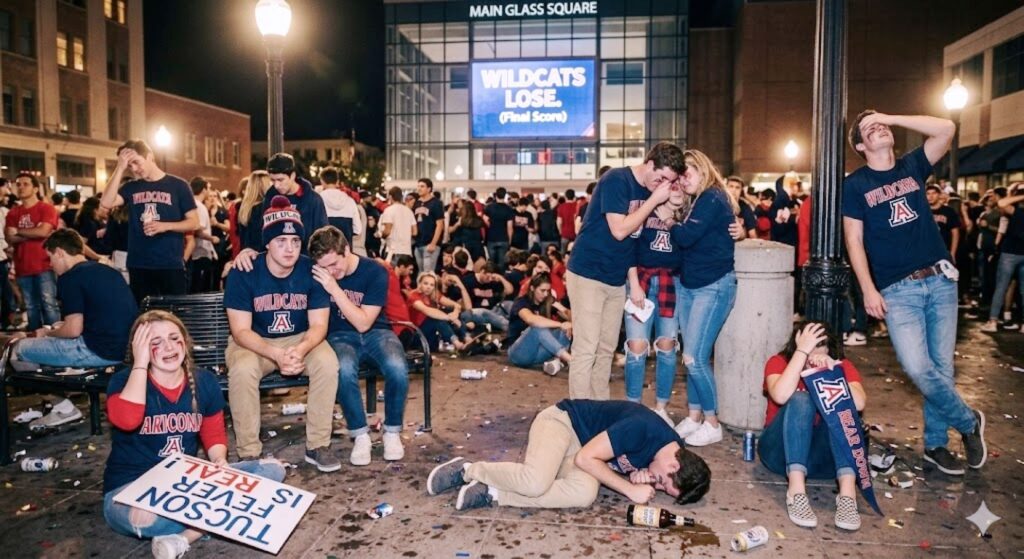
In those moments, we turn to the late, great cosmic philosopher of the Pac-12, Bill Walton. He reminded us that this wasn’t just a game, but a celebration of life, consciousness, and the magnificence of the desert sun.
He was right. In Tucson, the fever isn’t the problem — it’s the point. We wear the lucky shirt. We ignore the taxes. We believe. And every March, we willingly catch it all over again.
Official Medical Disclosure & Prophylaxis
DISCLAIMER: The clinical observations and equipment recommendations above (including the SES-A-V-SYNC synchronization device and the vintage T-shirt)) are for diagnostic and entertainment purposes only.
AFFILIATE NOTICE: In accordance with the Wildcat Transparency Act, please be advised that links to medical equipment in this study are affiliate links. If you purchase a device to stabilize your Superstition Syndrome, the author may receive a small commission at no extra cost to you. These funds are used exclusively to maintain the author’s truck camper, “Diogenes,” and to fuel his ongoing geological and cultural expeditions across the United States.
WARNING: Use of the “Brian Jeffries Protocol” does not guarantee a Final Four appearance. If symptoms of Anticipatory Traumatic Stress persist after the first round, please consult a local bartender or reread the works of Bill Walton.
John Wakefield, Ph.D., is a retired geologist and the founder of Artistry in Glass. Though born in England, he arrived in Tucson in the early 1980s — the same time Lute Olson took over at McKale Center. While Lute spent the next few decades building a basketball dynasty, John spent 40 years building a local business and a permanent case of Wildcat Fever. He currently travels the U.S. in a truck camper named “Diogenes,” documenting his findings in these links