
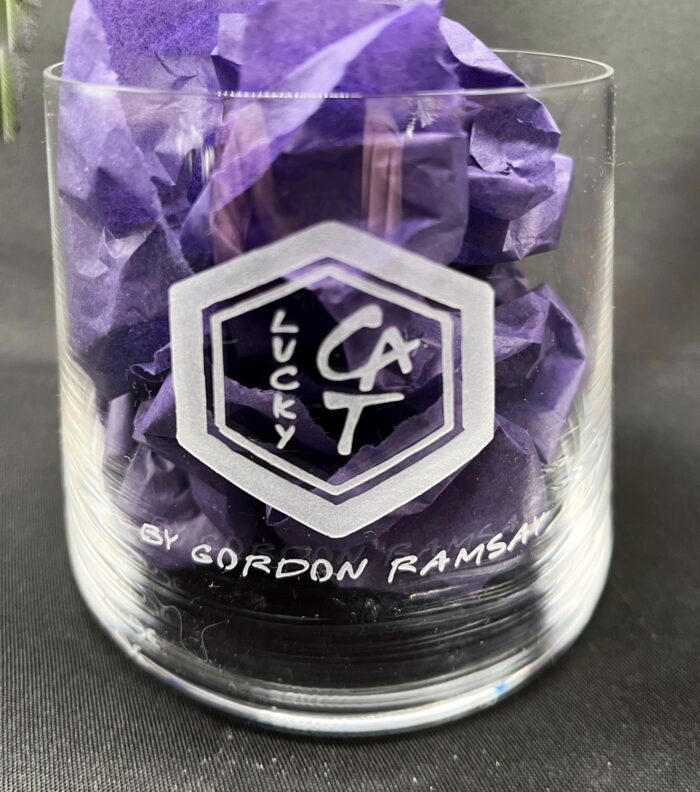
I used to dismiss psychology as “psychobabble” until a disaster with twenty crystal glasses provided the proof I was looking for.
My oldest school buddy, Jeff, showed up one afternoon looking like a man who had lost his last friend. He was pale and hollow-eyed, offering nothing but a blank stare as he stepped inside. ‘What’s wrong, Jeff?’ I asked.
He looked up, eyes glassy. “Marilyn left me. I don’t know what I’m going to do. Do you mind if I stick around here for a while?”
He was in terrible shape. Jeff was deeply in love, and the finality of the split had shattered him. We made him comfortable, gave him a room, and tried to provide a soft place for him to land.
The Skeptic and the Scholar
I figured he’d spend a few days binge-watching Netflix, or self-medicating with his favorite John Jameson whiskey.
Instead, the next night, I found him curled up in bed with a dog-eared paperback.
“What are you reading?” I asked.
He showed me the title page: “On Death and Dying” by Elisabeth Kübler-Ross.
“This woman knows what she’s talking about.” Jeff said, tapping the cover. “She goes through the stages of grief — from denial and anger to bargaining, depression, and then acceptance. I’m stuck on anger. She’s helping me make sense of the mess in my head.”
I’ve always considered myself a man of the enlightenment, requiring facts rather than superstition. I couldn’t help responding.
“Jeff, you and I are scientists,” I said. “We believe in data. These psychological theories — they sound neat, but they’re not hard science, right? They’re anecdotes — just stories with no objective proof.
Jeff shook his head. “Listen, I’ve lived it. I’ve been through denial. I’m finishing the anger and moving into sadness. I believe this book because I’m feeling it.”
The glass cleaning debacle
I decided Jeff needed a distraction. “We’ve got to take your mind off this. Come into the shop tomorrow. We have a massive order for the Lucky Cat restaurant — 250 crystal glasses that we are etching with the company logo.”
To create the design, we apply a stencil and sandblast the glass with aluminum oxide — an aggressive, grey grit with a Mohs hardness of 8. It’s essentially a high-pressure stream of microscopic sapphires that carves deeply into the soft crystal.
“The cleanup is the easy part,” I told Jeff. “Just soak them in soapy water, peel the tape, rinse them thoroughly, and dry them. But for God’s sake, be careful — these are ten-dollar crystal glasses, and that grit is nasty. If even a few grains stay on your sponge, it acts like sandpaper.”
A few hours later, I went to check on the first batch of twenty glasses. Jeff was standing over the sink, surveying a freshly cleaned glass with a pleased expression.
I picked one up, held it to the light, and my heart sank.
Fine, white scratches covered the entire surface of the crystal.
Jeff hadn’t rinsed the abrasive grit off before he started scrubbing. He had essentially taken a handful of microscopic diamonds and rubbed them into the soft glass with a sponge. He had ruined every glass.
“Jeff,” I said, my voice rising. “Look what you’ve done. You’ve scratched them all. That’s two hundred dollars down the drain!”
What happened next lived up to every word in the book I had mocked the night before. Jeff looked at the glasses in shock. His words flooded out in an anguished stream:
“No, I haven’t … oh, shit … are you sure? … oh, I’m so sorry … what are we going to do?”
“Jeff,” I said slowly, holding up a scratched glass. “Do you realize you just went through Elisabeth Kübler-Ross’s five stages of grief in about 1.8 seconds?”
He blinked. “What are you talking about?”
I counted on my fingers:
1) “No, I haven’t!” — Denial
2) “Oh, shit!” — Anger
3) “Are you sure?” — Bargaining
4) “I’m so sorry.” — Depression
5) “What are we going to do?” — Acceptance
I stood there looking at a friend who was finally, for the first time in a week, thinking about something other than his love life.
For years I have called psychology “phony-baloney psychobabble.” I needed evidence — numbers, repeatable results. But watching Jeff recapitulate those stages of grief in real time was more proof than any double-blind experiment could provide.
The data had been there all along, confirmation that evolutionary psychology is solid science — and all it took to convince me was a ham-fisted old school friend … and twenty scratched whiskey glasses.
If you enjoyed this piece, I’d love to see you over on Medium. Following me there and engaging with the story—whether through a few claps, a highlight of your favorite line, or a comment—makes a massive difference. These small actions signal to the algorithm that the work is worth sharing, helping it reach a wider audience of fellow creators and travelers. Thanks for being part of the journey!