Watching heroes on the news triggered a 1949 memory of a locked toilet and two men in Air Force blue.
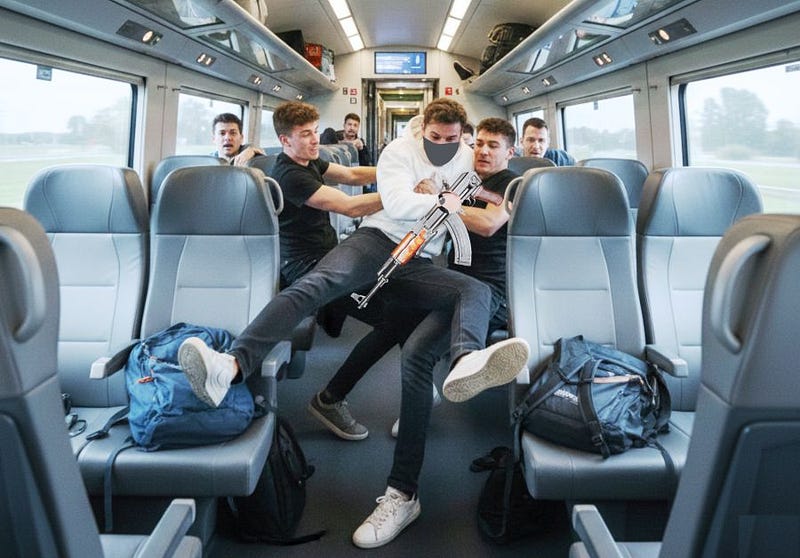
August 2015. A single, incredible image dominated the TV news cycle: three off-duty American servicemen wrestled an armed terrorist to the floor of a Paris-bound train. Armed with nothing but instinct, they disarmed a man carrying an AK-47 saving hundreds of lives. Watching them, I felt a quiet surge of admiration for my adopted country, and a nagging question. This hands-on courage is the same spirit that defined the last moments of United Flight 93, when ordinary citizens decided they wouldn’t just be witnesses to history — they would take action.
Is courage a distinctively American trait?
The TV coverage triggered a distant echo from my childhood — the thunder of a locomotive from the classic days of steam in post-WWII England.
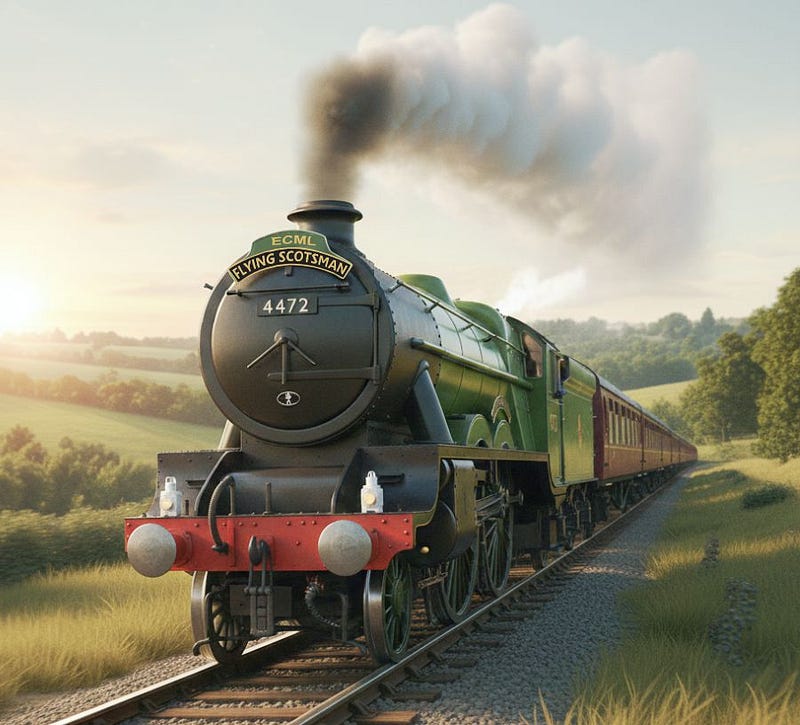
It is 1949, and I am five years old, a small passenger on the first steam locomotive to exceed 100 mph — the historic Flying Scotsman. Sparks and smoke billow past our carriage windows as the green fields of England flash by. I’m in a magic bubble on this famous train, far from the tedium of my black and white everyday existence.
We played unsupervised in city streets pockmarked with bomb craters. We drank National Health Service orange juice and cod liver oil blissfully unaware of the austerity, the rationing and the bleak greyness of post-war Britain.
Our family boarded the train at Doncaster on our way to visit relatives in London. I am exhilarated by the ECML green livery, the deafening roar of the engine, the click-clack of the wheels on the tracks, and the smell of sulphurous smoke. I am most excited about the ice cream Mummy promised me at the Lyons Corner House on King’s Cross Station.
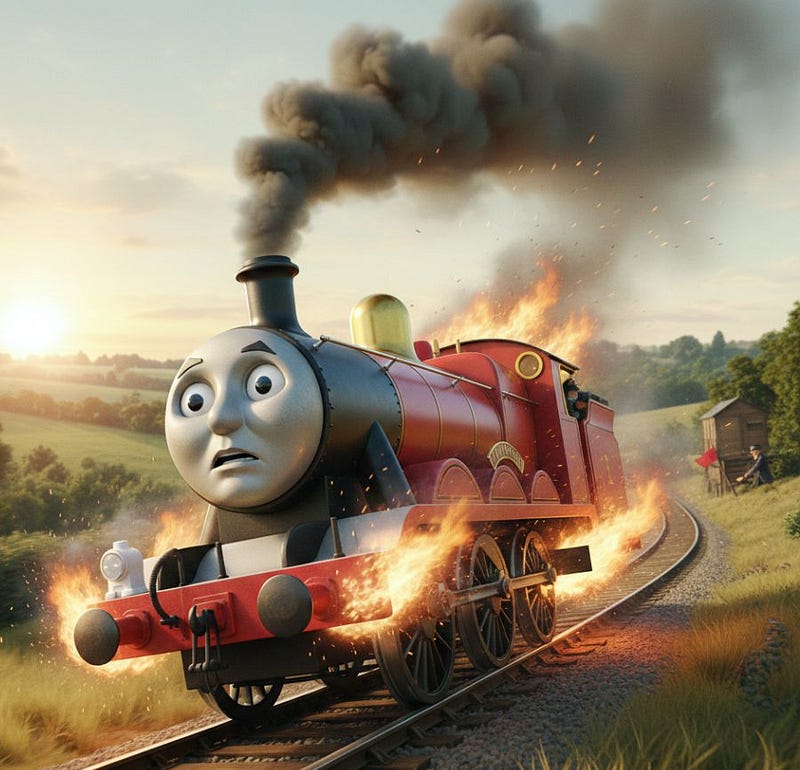
The only cloud on my horizon is the terrifying picture in my Thomas the Tank Engine book where James crashes after his wooden brakes catch fire on a steep incline. My father carefully helps me skip that scary page every time we read the book.
My mother signals to Dad. “Stan, put the book down — that was Stevenage — we’ll be at King’s Cross in 15 minutes. Take him to the toilet so he doesn’t get caught short on the Tube.”
Dutiful as always, my dad leads me by the hand down the swaying corridor.
The green suburban scenery has given way to the noxious smog of the city. Gasometers, goods yards, coal wagons, railway sleepers — everything grey — everything covered with a layer of industrial grime as we approach London.
We cross between two carriages in a blast of cold air. The sound increases to a deafening, rhythmic metallic crescendo. I peer down between the sliding steel plates and clanking couplings to glimpse the tracks rushing by beneath.
Dad opens the toilet door and ushers me inside, whispering loudly:
“Lock the door, son. Push the latch to the right.”
The lock closes; the “vacant” sign switches to “engaged,” and I brace myself against the mahogany walls of the vintage toilet.
Done. My shoes are a bit splashy and the floor is wet, but it doesn’t matter. I tuck in my shirt and grab the cold, heavy latch.
At five years old, my fingers are small, and no match for a lock jammed by decades of grime. As the carriage lurched across the points, the heavy bolt remained frozen. I can’t move it. I am a prisoner of the Age of Steam.
“Daddy, Daddy, I’m stuck. I can’t do the handle! Help me!”
My father is impatient. “Come on, son — push to the left! Hurry; we’ll soon be at the station!”
I panic. Will I be stuck in this toilet all night on a deserted train like Tank Engine Thomas abandoned in the sidings? I struggle with the lock.
“Daddy, come in; I can’t get out!”
“I’m here, don’t worry — push harder — no, not that way!”
The train rocks, and the lights flicker as we plunge into a tunnel. The steam whistle shrieks. To a five-year-old, the toilet is no longer a room; it’s a rattling prison. I cry, I wail. My dad is on the other side, helpless against the heavy door.
Later, I reviewed my dad’s predicament. A devoted father, at his wit’s end, calling in vain for help from the train guard. Wrestling with the lock. Was he about to pull the communication cord to stop the train? I will never know because, miraculously, two good Samaritans arrived.
They were US servicemen on duty in England at the start of the Cold War — assisting with the Berlin Airlift and taking a break from their duties for some R&R in London.
Through my tears, I hear fresh voices over the clickety-clack. Voices conferring in accents that sound like the actors in a Lone Ranger film. Who are these strangers? Where’s my daddy?
“Daddy, daddy where are you!”
“Don’t cry, son, I’m still here.”
From the other side of the door, comes a scraping of metal on metal, a rasp of prying steel. The splintering of wood. Suddenly, the door swings open. Two American servicemen have dismantled the brass plate, unscrewed and removed the lock — and delivered me into the arms of my grateful father.
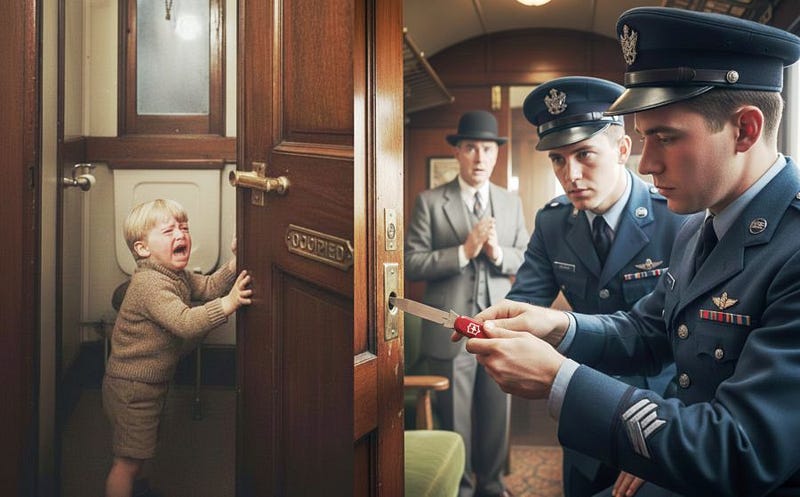
My rescuers from the “New World” are clean-cut and dressed in airforce blue.
“Easy does it, ace. You’re in the home stretch now — here, have a stick of Wrigley’s.”
I take the spearmint, my legs giving way as I collapse into my father’s embrace.
Just in time, the train begins its long deceleration into the soot-stained cathedral of King’s Cross. My technicolor heroes don’t wait for thanks; they pocket their tools, adjust their caps, and vanish into the London fog.
Back in 2015, I wondered again: Are Americans temperamentally more suited to action under pressure — more likely than the English to come to the rescue in emergencies?
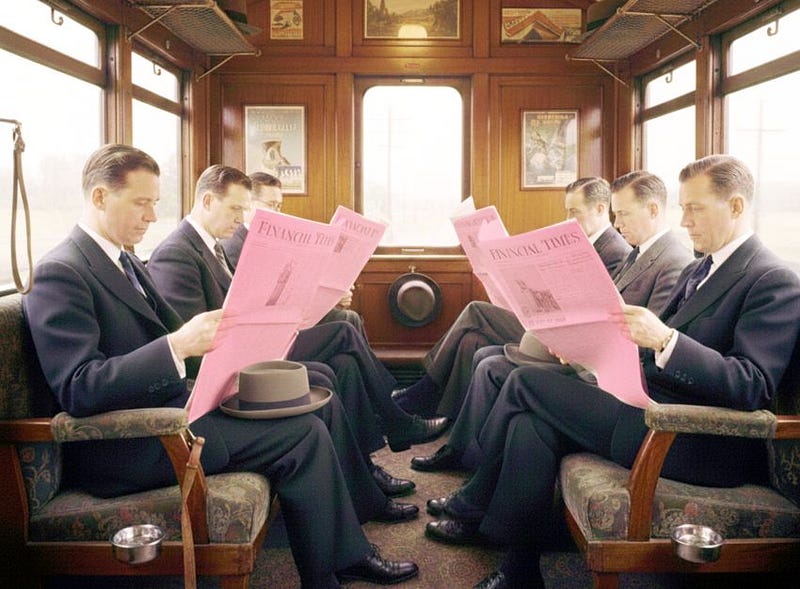
I recall the train journeys of my youth, commuting to London on the Metropolitan Line from Amersham to Baker Street. My fellow passengers, with their rolled-up umbrellas, hide behind their pink newspapers. Their reserve is legendary. These bankers and civil servants will not converse with their neighbors, except for a perfunctory nod, until they have known each other for at least 20 years.
My wonderful, caring dad had every desire to free me from that rattling prison, but he was a man of an older world — one that respected the permanence of locks and the authority of a closed door. He lacked the tools, but more importantly, he lacked the audacity required to take action.
In contrast, my rescuers didn’t just have stainless steel utility knives; they possessed a temperament forged by a can-do culture. To them, that toilet latch wasn’t an immovable object — it was merely a temporary inconvenience on the way to a destination.
This was the “New World” in action. It was a flash of Manifest Destiny in an English train corridor — that restless, American conviction that the horizon is meant to be crossed and any barrier in the way is meant to be broken. It was the spirit nurtured on the Western frontier and sharpened in the discipline of West Point: the belief that the individual doesn’t just endure history; he shapes it with his own hands.
From a locked toilet on the Flying Scotsman in 1949, to the desperate gamble of Flight 93, to the Paris-bound express decades later, the American ‘can-do’ spirit seems less like a choice than a biological reflex. It is a refusal to be a passenger in one’s own life.
As the 2015 news report played out on my screen, I didn’t see strangers on a French train. I saw the ghosts of 1949 — men with steady hands and silver tools, freeing me just as our train was pulling into the station. I understood that while the English taught the world to “keep calm and carry on,” the Americans taught us you don’t have to wait for the guard to bring the key.
You can demolish the door.